
ARCHIVE: THE LEAP LETTER #1 - AUGUST 2026
Welcome to the very first edition of The Leap Letter!
Whether you're one of ChessLeap’s growing number of students, a parent following your child's progress, or simply someone who enjoys playing in their spare time, thank you for being here. I'm delighted to have you join the ChessLeap community.
Each month, you'll find a collection of ideas, games and challenges designed to inspire your own chess journey.
In every edition, you can look forward to:
Opening Moves – Our regular news bulletin.
Masterclass – An annotated game from one of history's greatest players.
Community Game of the Month – A brilliant game submitted by one of our students or newsletter readers, complete with analysis and key lessons.
Your Move! – Three carefully selected puzzles to test your tactical vision and keep your calculation sharp.
And so without further ado…
Opening Moves
It's been an exciting few weeks for ChessLeap. Since launching we've welcomed a growing community of students and families, expanded our coaching team, and continued building new resources that will be available over the coming months.
In October we will be hosting our first group lecture How Great Chess Players Think, completely free. Spaces will be limited, so be sure to register your interest early: Info@chessleap.com
A special mention this month goes out to our student Xav, who recently received the 'Most Improved Player' trophy at his school chess club. We're incredibly proud of the dedication and enthusiasm he's shown throughout the year, and it's wonderful to see that hard work recognised. Congratulations, Xav!
Finally, I'd like to thank everyone who has subscribed so far. The Leap Letter is something I've wanted to create for a long time—not just as a newsletter, but as a common space where the ChessLeap community can learn together, celebrate each other's progress, and share our understanding of the game.
Happy reading!
Andrew Buzzeo
Founder, ChessLeap

‘Most Improved Player’. Congratulations, Xav!
Masterclass
The Game of the Century
(Donald Byrne - Bobby Fischer 1956)
At just 13 years old, playing with the black pieces, Bobby Fischer stunned the chess world with a victory over the experienced American master Donald Byrne in New York, 1956. The game quickly became known as "The Game of the Century", because of the extraordinary imagination and precision Fischer displayed at such a young age.
The encounter features one of the most celebrated queen sacrifices in chess history. Rather than chasing material, Fischer demonstrated the power of activity, piece coordination and long-term planning, showing how the initiative* can outweigh even the loss of his most dangerous attacking piece.
Nearly seventy years later, it remains one of the most instructive and inspiring games ever played.
*My students will recall that the initiative is one of the core imbalances we need to identify in order to construct our plans.
1.Nf3 Nf6 2.c4 g6 3.Nc3 Bg7 4.d4 0-0 5.Bf4 d5 6.Qb3
The Grünfeld Defence. 6.Qb3 is a nice idea—applying indirect pressure on d5 and asking Black’s c8 Bishop whether it is prepared to babysit the b7 Pawn. If 6…dxc4 7.Qxc4—as happens in the game—White hits c7 twice, taking the centre while Black negotiates how to handle this.
(6.Rc1 is the more popular try. If 6…dxc4 7.e3 Be6 then 8.Ng5 and Black struggles to hold the material advantage.)
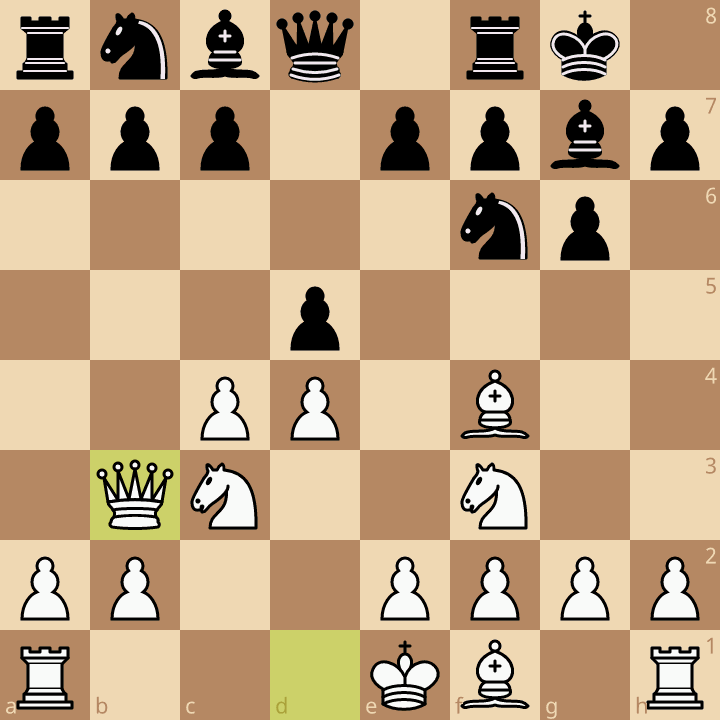
6…dxc4 7.Qxc4 c6 8.e4 Nbd7 and the Knight eyes the tempo-gaining b6 square.
9.Rd1 Nb6 10.Qc5 Bg4 11.Bg5??
White needed to prioritise development and get his King out of the centre. 11.Be2.
Fischer’s attack is immediate!
11…Na4!! a stunning reply.
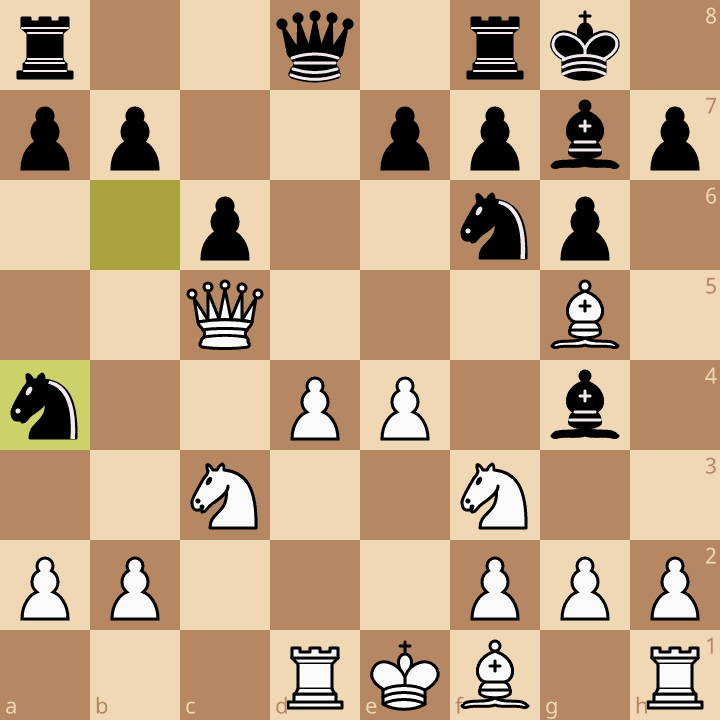
12.Qa3
If 12.Nxa4 then 12…Nxe4 and 13…Qa5+ looms, while Black’s Knight and Bishop dominate the centre. For example: 13.Qxe7 Qa5+ 14.b4 Qxa4 with Rfe8 coming. Taking the Knight on e4 is suicide. 15.Qc7 Nxg5 16.Nxg5 Qxd1# And if 13.Bxe7 then 13…Rfe1 all the same.
12…Nxc3 13.bxc3 Nxe4 14.Bxe7 Too little, too late. White desperately needs to castle. 14…Qb6 15.Bc4
If 15.Bxf8 Bxf8 16.Qb3 Re8! 17.Qxb6 axb6 18.Be2 Nxc3 19.Rd2 Bc3 and the torture resumes.
15…Nxc3!! another brilliant combo, spying the overburdened Queen and the opportunity to pin White’s Bishop. 16.Bc5 Rfe8+ 17.Kf1 and with that White’s without castling rights and effectively down a Rook. 17…Be6!!
The move of a century. 13 years old.
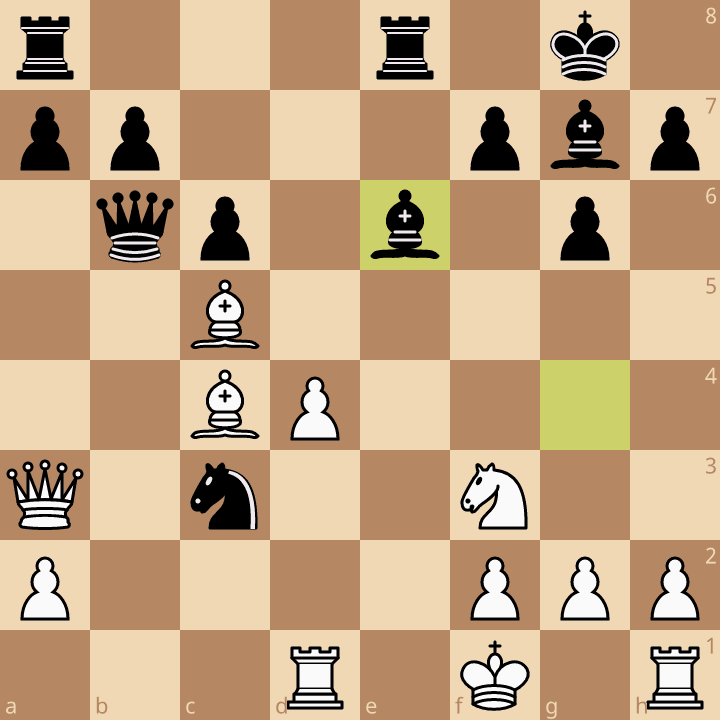
18. Bxe6 loses to 18…Qb5+ 19.Bc4 Qxc4+ 20.Kg1 Ne2+ and smothered mate is on the horizon: 21.Kf1 Ng3+ 22.Kg1 Qf1+ 23.Rxf1 Ne2#
18.Qxc3 and Black exploits the pin: 18…Qxc5! 19.dxc5 Bxc3 20.Bxe6 Rxe6 Black is up material with a more active position.
Donald took the bait: 18.Bxb6?? Bxc4+ 19.Kg1 Ne2+ 20.Kf1 Nxd4+ 21.Kg1 Ne2+ 22.Kf1 Nc3+ 23.Kg1 axb6
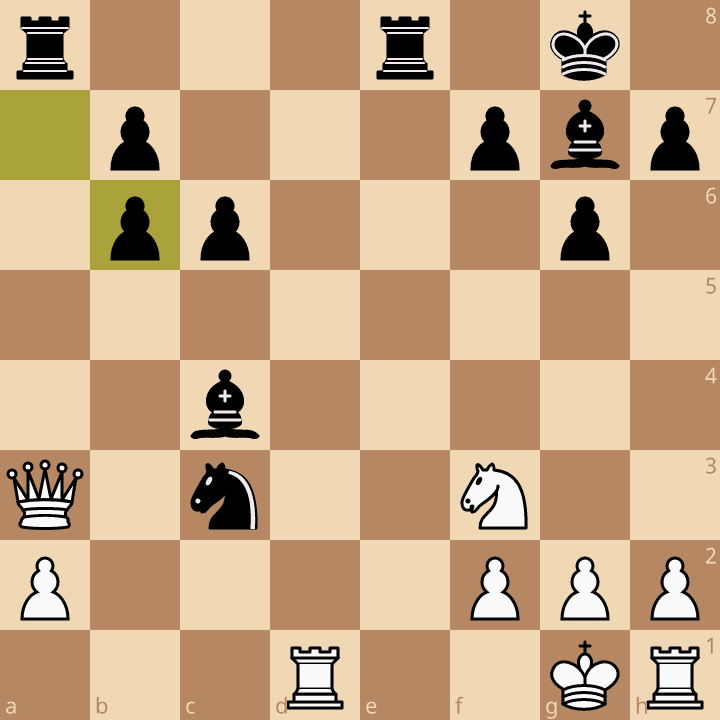
Let’s pause and take stock: Fischer collected both Bishops, a Pawn, initiative against White’s Queen, Rook, and King; not to mention White’s Rook on h1 still refuses to participate.
All that’s left is for Black to cinch the win.
24.Qb4 Ra4 note the spectacular harmony of Fischer’s pieces. 25.Qxb6 Nxd1 26.h3 Rxa2 27.Kh2 Nxf2 28.Re1 Rxe1 29.Qd8+ Bf8 30.Nxe1 Bd5 31.Nf3 Ne4 32.Qb8 b5 33.h4 h5 34.Ne5 Kg7 35.Kg1 Bc5+ 36.Kf1 Ng3+ 37.Ke1 Bb4+ 38.Kd1 Bb3+ 39.Kc1 Ne2+ 40.Kb1 Nc3+ 41.Kc1 Rc2# 0-1
Community Game of the Month
This month’s Community Game features Andrew’s student Will with the black pieces. White botches a premature attack, losing precious time with their Queen and pursuing an empty Pawn charge on the h-file. Noticing that White has failed to ensure their King’s safety, Black counters well and converts the endgame neatly.
1.e4 Nf6 2.e5 Nd5 3.c4 Nb6 4.c5 Nd5 Alekhine’s Defence: Lasker variation… 5.d4 (5.Nc3 or 5.Bc4 would be more precise) 5…d6 6.exd6 cxd6 (6…exd6 is a perfectly acceptable approach) 7.Bb5+ Bd7 8.Qa4??
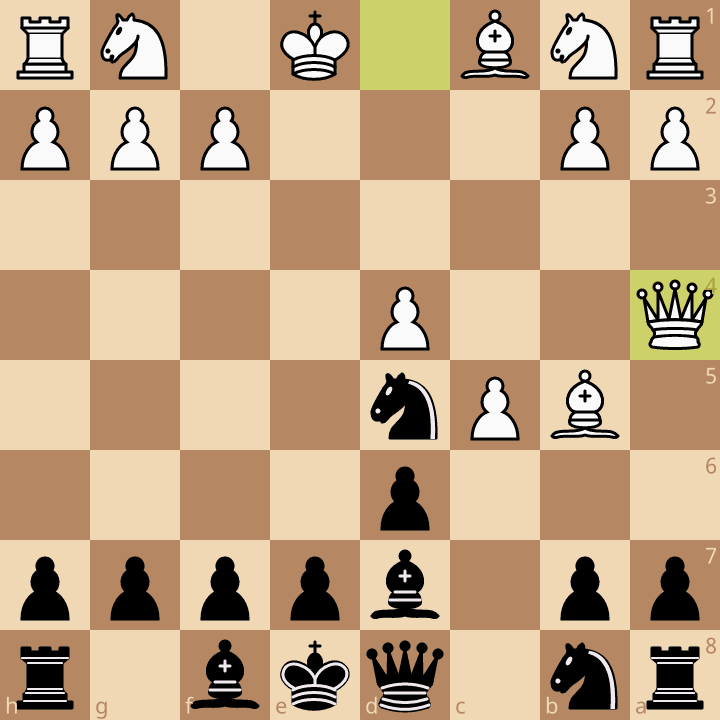
White’s real priority should be challenging the Knight on d5. The battery threat here is an illusory one. If anything, it aids Black in untangling his pieces. Better was 7.cxd6 Qxd6 8.Nc3 with Nf3 and Bc4/Be2 ideas to follow. Be2 normally meets Black’s Bg4 threat. Bc4 questions the Knight etc.
8…Nc6
8…dxc5 would relegate White’s d-Pawn to the status of an overextended c-Pawn. 9.Bxd7 Qxd7 10.Qxd7 Nxd7 for example. There is no 11.b4 or 11.Be3 because of Black’s Knight on d5.
9.cxd6 exd6 Black took on an unnecessary IQP here. 9…a6 10.Bxc6 Bxc6 would allow Black to recapture on d6 with his Queen. Or 10.Be2 where either of Black’s Knights would be happy to perch on b4, threatening a fork on f7.
10.Qc4 Nb6 11.Qe2+ Be7 12.Nf3 0-0 13.h4??
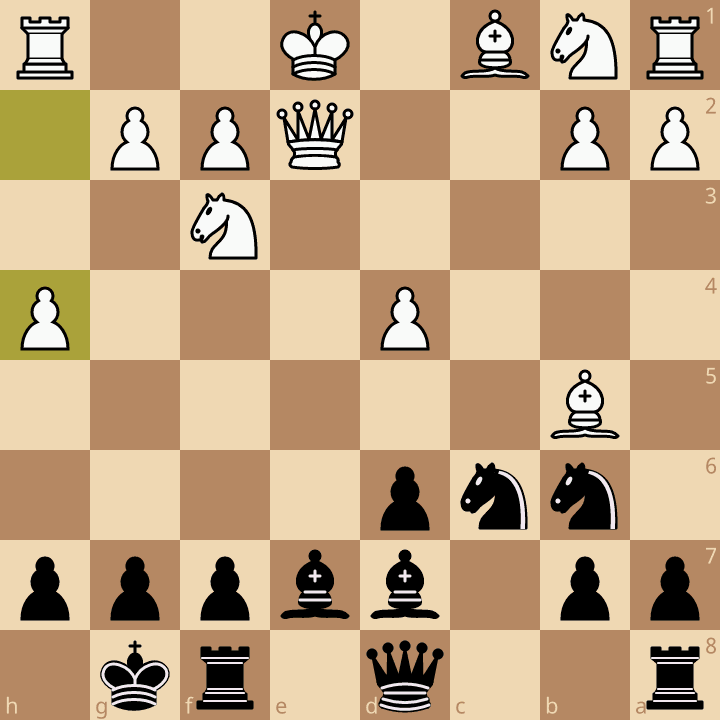
White should know better! They are less developed and their King is stuck in the centre. Opening lines favours Black.
Black sets up a nasty discovered attack on White’s Queen: 13…Re8 14.Be3 Bg4! with the Knight tied down, the Pawns on d4 and h4 begin to melt. 15.g3?? White needed to break the pin. Now it’s already over: 15…Bf6
16.d5 triggers 16…Ne5.
16.Nbd2 Bxd4 17.Qd3 Qf6?
17…Bxe3 18.fxe3 Ne5 would have probably been the simplest way to cash in but 18…Nb4 is truly disastrous for White.
18.Ng5?? Bf5
With the pin broken there was nothing to stop White eliminating the Bishop and releasing the pressure: 18.Nxd4
19.Nde4
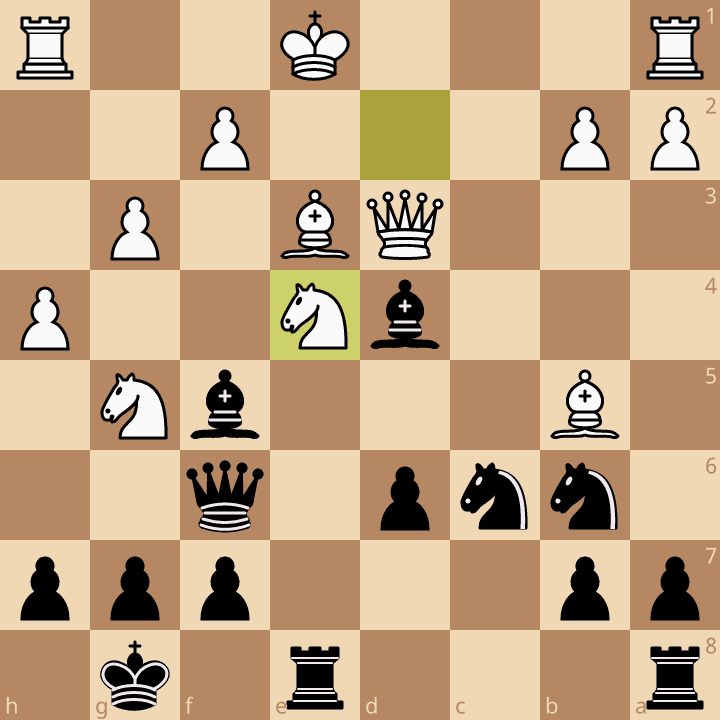
19…Bxe4 20.Nxe4 Qg6?
The killer blow was 20…Qf3!
21.0-0-0 Bxe3+ 22.fxe3 Qxe4 23.Rhe1 Qxd3 24.Rxd3 Rac8 25.Kb1 a6 26.Bxc6 Rxc6 27.b3 g6 28.g4 d5 29.g5 Re4 30.Rh1 Kg7 31.Kb2 Rce6 32.Rh3
And Black patiently converted: 32…h6 33.gxh6+ Kxh6 34.a4 a5 35.Kc3 Kh5 36.Kd2 Rxh4 37.Rxh4 Kxh4 38.Kc3 Re4 39.Kd2 Kg4 40.Ke2 Kf5 41.Kf3 Ke5 42.Rc3 Kd6 43.Rd3 Nd7 44.Rd4 Rxd4 45.exd4 Ke6 46.Kf4 f6 47.Kg4 Nf8 48.Kf4 Nh7 49.Kg4 Ng5 50.Kf4 Ne4
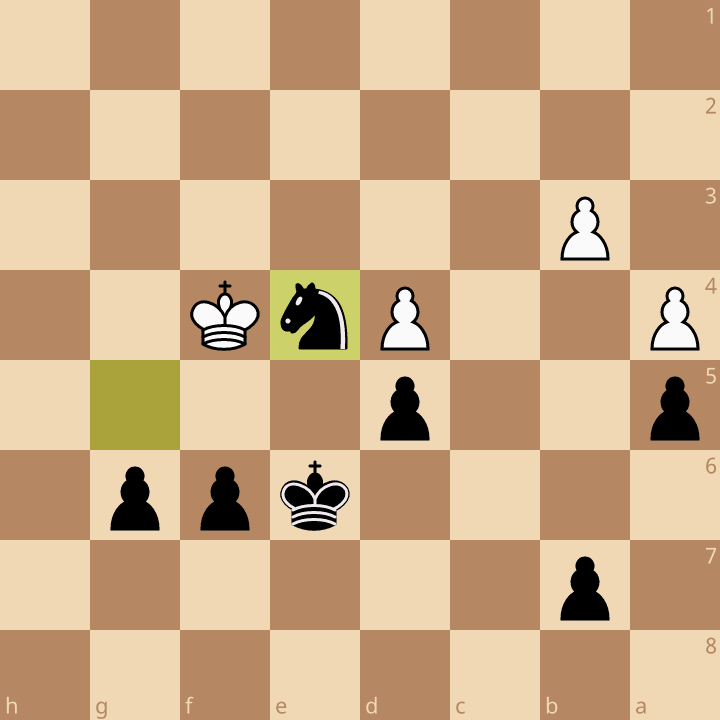
51.Ke3 Kf5 52.Kd3 Kf4 53.Ke2 Kg3 54.Ke3 f5 55.Ke2 f4 56.Kd3 f3 57.Ke3 f2 58.Ke2 Kg2 59.Ke3 f1=Q 60.b4 Qf3# 0-1
Submit your game for a chance to be featured in September’s edition: info@chessleap.org
Your Move
Solutions will be given in September’s newsletter.
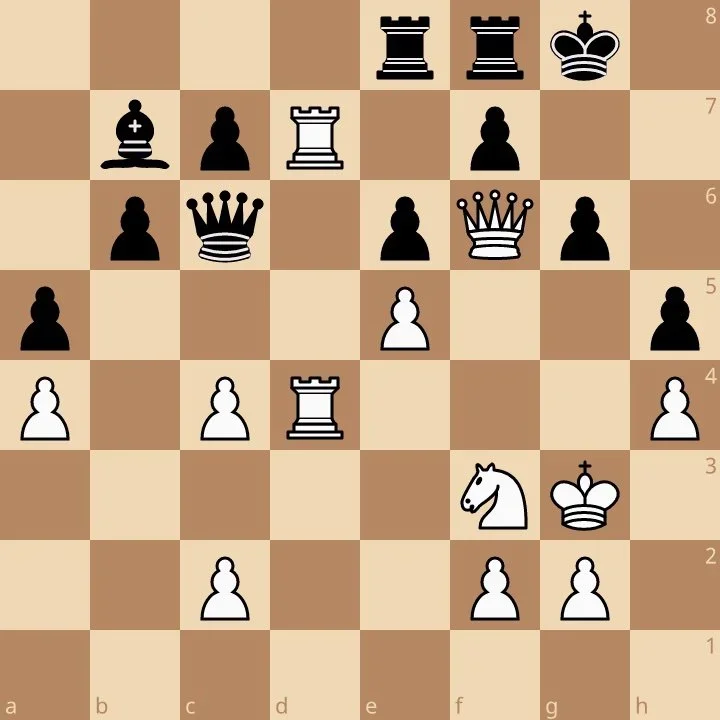
How can White best exploit Black’s dark-squared weaknesses?
Nigel Short - Jan Timman, Tilburg 1991
From Jeremy Silman’s ‘How to Reassess Your Chess’. Students may recognise this one! (Spaced repetition.)
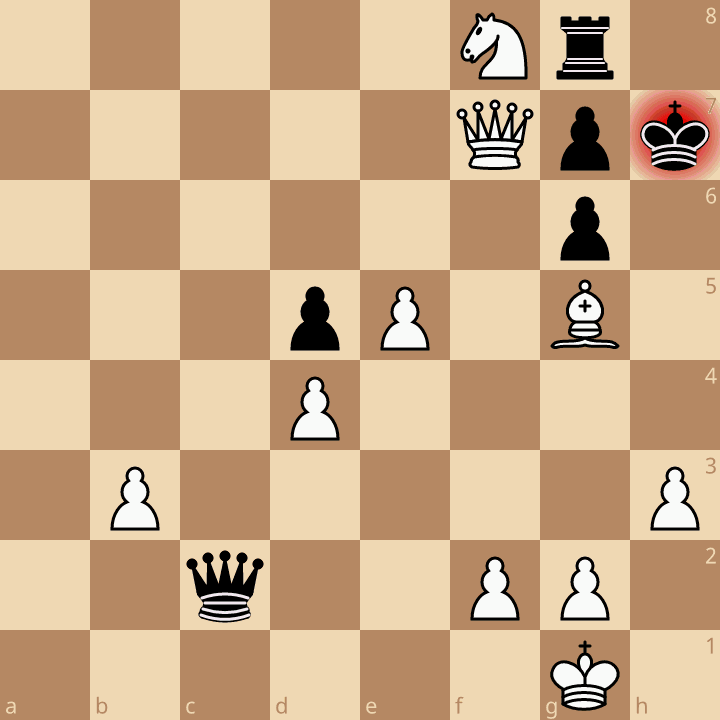
Black to play and save the game.
N.Coward-E.Figueroa
Hastings Major 2024
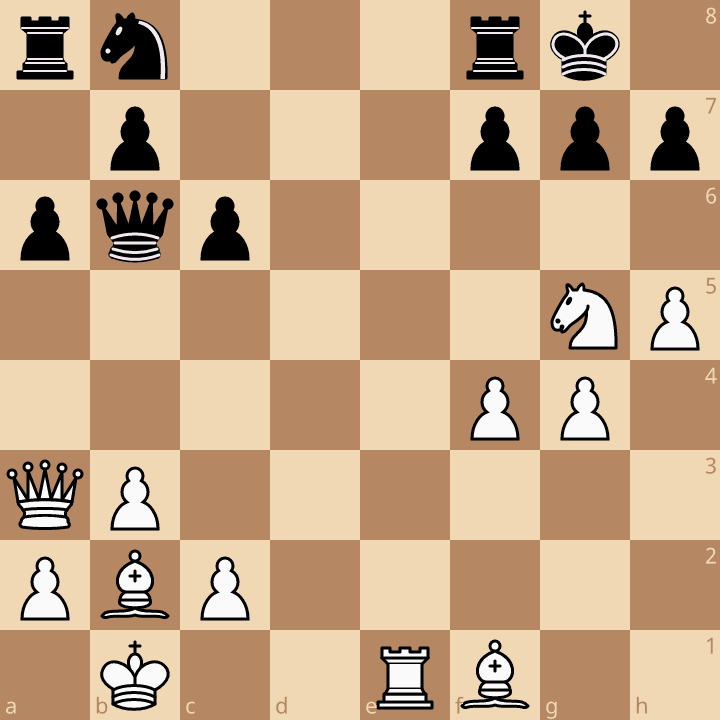
White to play and win.